Persuasive Demand Letters Built on Medical Evidence.
Truth & Trials prepares AI-assisted, physician-reviewed demand letters for injury and malpractice matters, giving legal teams polished drafts built from records, damages and case facts.
Demand letters that do the heavy lifting before negotiations begin.
A strong demand letter frames liability, medical evidence, damages and settlement posture before negotiations begin.
Truth & Trials drafts case-specific letters from medical records and case materials, combining AI-assisted organization with medical review.
Each letter presents injury history, treatment course, causation and damages in a format insurers can evaluate seriously.

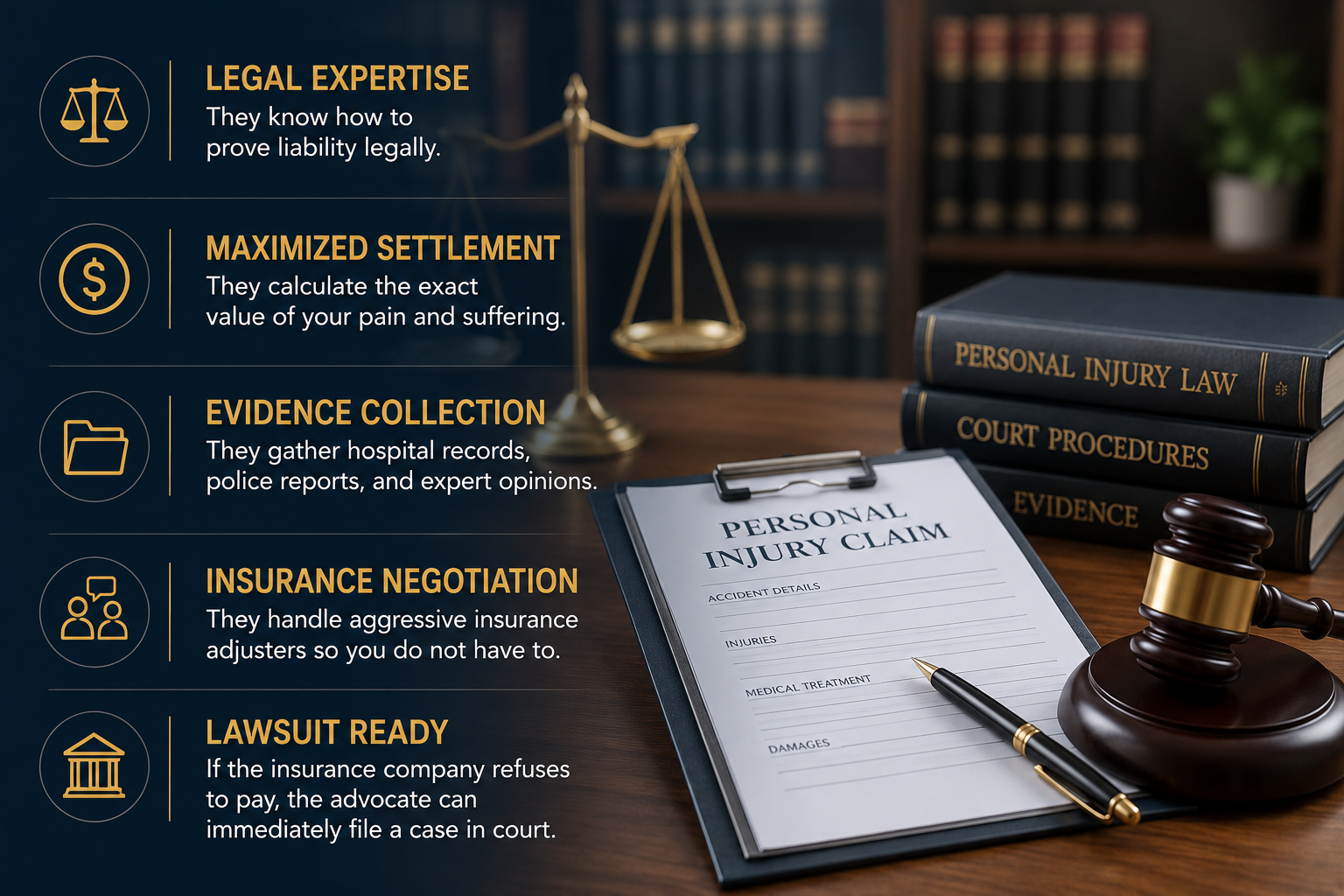

Why firms use our demand letter drafting support.
Free your team for higher-value work
We handle the drafting lift so attorneys can focus on strategy, clients and negotiation.
Clinically credible demands
Record-based review helps ensure injuries, prognosis, treatment and damages reflect the clinical file.
Built to move settlement talks
The letter presents risk, damages and supporting facts so insurers understand the claim value.
Useful for any caseload size
The workflow supports one-off drafts or monthly volume with consistent formatting and turnaround.
From case records to a review-ready demand letter.
Submit records and case details
Upload records, liability facts, photos, witness notes, correspondence and damages documentation.
Medical review and drafting
Records are reviewed for treatment history, damages and causation, then shaped into a persuasive letter.
Receive the final draft
Your team receives a polished draft for review and release. Expedited support may be available.
What your demand letter package contains.

Complete Demand Letter
- Clear liability opening and legal basis of claim
- Chronological medical narrative from source records
- Treating providers, diagnoses and care progression
- ICD and CPT code references where useful
- Economic damages, lost wages and related costs
- General damages for pain and quality-of-life impact
- Settlement demand structure with supporting rationale
Medical Analysis and QA
- Physician-reviewed injury and treatment analysis
- Standard of care notes for malpractice matters
- Causation mapping between injury, care and outcome
- Source references for key medical facts
- Missing records, gaps or inconsistencies flagged
- Firm template, tone and formatting
- Optional summaries, chronologies or supporting exhibits
The first serious presentation of the claim.
A demand letter is a formal document sent to an insurer or opposing counsel before litigation, explaining the claim, evidence and settlement amount requested.
A strong letter organizes liability, treatment history and damages into a persuasive narrative. In malpractice matters, it can also address standard of care and causation.
Because insurers evaluate risk from the demand package, quality can influence settlement speed and offer strength.

Demand letters for different injury and liability matters.
Auto and MVA Injury
Letters for collisions, rideshare incidents and pedestrian injuries with treatment context.
Premises Liability
Letters linking unsafe conditions to injury, treatment and daily life impact.
Workers' Compensation
Workplace injury demands with provider care, restrictions and wage loss.
Catastrophic and TBI
High-value demands covering acute care, rehabilitation and future costs.
Dog Bite and Assault
Focused demands for wound care, scarring and quality-of-life impact.
Medical Malpractice
Pre-suit demands addressing standard of care, breach and damages.
Nursing Home Neglect
Letters built from records, care logs and incident documentation.
How demand letter services support your legal practice.

Demand letters give a structured view of evidence, liability and damages.
Review-ready drafts keep pre-litigation matters moving.
Clear medical facts help attorneys control the claim narrative.
Letters can match your firm's templates, tone and formatting.
Record review, damages framing and final demand presentation.
These visuals support the drafting journey from case materials to a settlement-ready demand package.
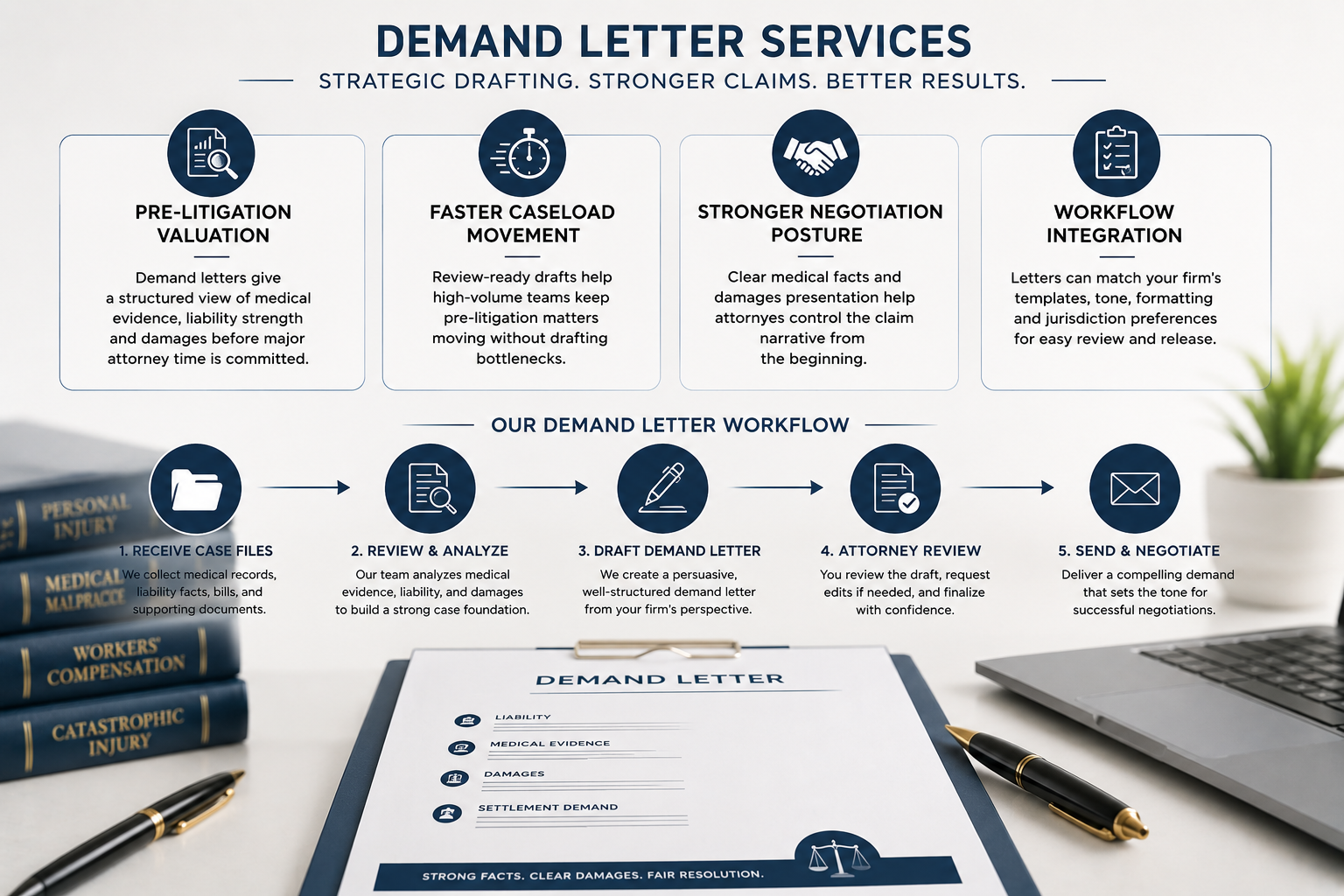
Medical depth, AI efficiency and quality control in one drafting workflow.
Every letter is built to be medically accurate, factually grounded and persuasive.
 Upload case records
Questions about demand letter drafting.
Quick answers for legal teams preparing settlement demands for personal injury, malpractice and serious injury matters.